

The Missing Dimension in Climbing Strength
Most climbing strength work focuses on:
- Finger flexion
- Pulling strength
- Shoulder stability
But climbing rarely loads the forearm purely in vertical flexion.
Every grip produces torque.
Slopers, pinches and offset holds demand:
- Rotational control of the radius and ulna
- Stabilization at the elbow
- Wrist alignment under asymmetric load
This is where pronation and supination matter.
What Pronation and Supination Actually Do
Pronation:
→ Rotating the forearm so the palm faces downward.
Supination:
→ Rotating the forearm so the palm faces upward.
Under climbing load, these rotations:
- Control grip orientation
- Stabilize elbow alignment
- Prevent unwanted torque collapse
- Influence wrist angle integrity
Weakness here does not always limit force.
It often limits control and tolerance.
Why Rotational Weakness Causes Problems
If pronator strength is insufficient:
- The forearm collapses under load
- Elbow stress increases
- Medial elbow irritation becomes more likely
If supination control is weak:
- Sloper stability decreases
- Wrist position drifts
- Compensatory muscle tension increases
Many chronic elbow issues are not pure overuse.
They are torque mismanagement.
What Rotational Tools Actually Train
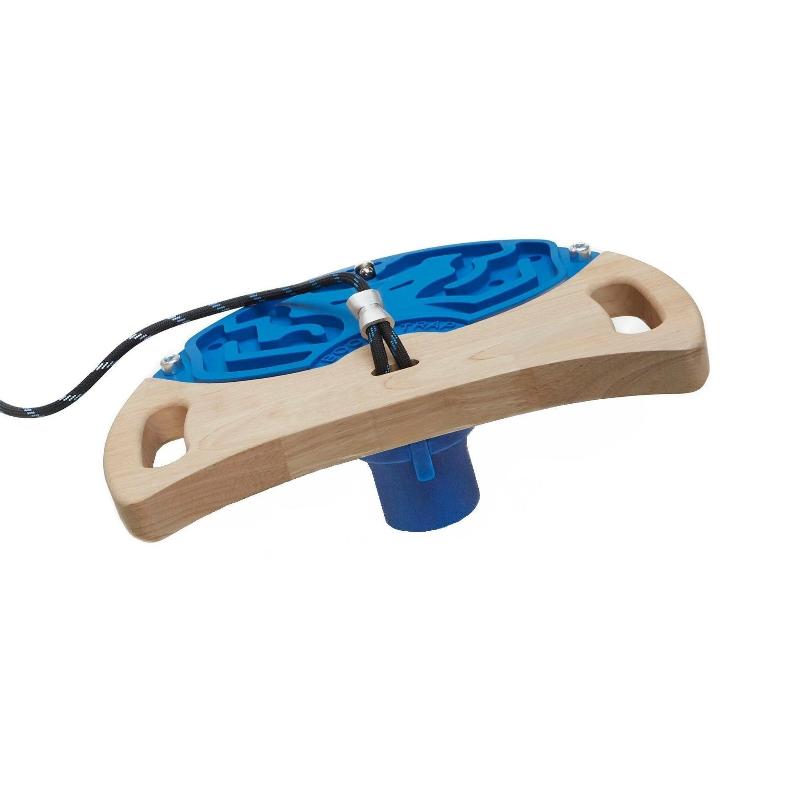
Pronator / supinator devices typically:
- Isolate rotational torque
- Load forearm musculature in a controlled axis
- Allow progressive overload
- Reduce compensatory movement
This makes them structural tools.
They primarily improve:
- Joint tolerance
- Tendon resilience
- Rotational strength symmetry
They are not maximal grip builders.
They are force stabilizers.
The Transfer Question
Do pronator tools increase edge strength?
Not directly.
Do they:
- Improve torque control on slopers?
- Reduce elbow irritation during board phases?
- Increase tolerance to asymmetrical grips?
Often, yes.
Their transfer is indirect but meaningful.
They raise the tolerance floor.
When Rotational Tools Are Most Valuable
They are particularly useful when:
- Medial or lateral elbow irritation appears
- Pinch and sloper control feels unstable
- Asymmetry between arms is noticeable
- High board volume is planned
They are less critical when:
- Beginner climbers are still far from force ceiling
- Training time is extremely limited
- No structural symptoms exist
They are corrective or preventive — not performance multipliers.
Neural vs Structural Bias
Rotational tools typically use:
- Moderate loads
- Controlled tempo
- Repeated exposure
This biases structural adaptation.
Explosive rotational training is rarely needed in climbers.
Stability under load is the goal.
The Hidden Benefit: Load Distribution
Improved rotational strength:
- Distributes stress more evenly across elbow structures
- Reduces peak tendon strain
- Improves wrist alignment under compression
Better torque control often allows:
- Higher training volume
- More sustainable board phases
- Fewer recurring irritations
They expand durability.
The Common Mistake
Using pronator tools to “feel productive” without:
- Progressive overload
- Symmetry tracking
- Clear purpose
Like any tool, they must be programmed.
Low-intent casual use does little.
Targeted progression builds resilience.
The Core Principle
Rotational tools do not increase peak pulling strength.
They increase torque control and structural tolerance.
They do not raise your ceiling dramatically.
They raise the floor that keeps the ceiling safe.
In advanced climbers, that floor often determines longevity.