


1. Why the Climber’s Ankle Is Vulnerable
Biomechanically:
- hinge joint (designed for dorsiflexion/plantarflexion)
- minor rotation joint (very limited safe rotation)
- high-force absorber (takes impact during landings)
The ankle is not designed for::
- sideways twisting under load
- rotational torque with fixed foot
- falling onto uneven or angled surfaces
- late foot placement during dynamic moves
Climbing involves all of these — especially bouldering.
2. The Three Main Climber Ankle Injuries
1. Lateral Ankle Sprain (most common)
Occurs when the foot rolls outward (inversion), overstretching the ATFL ligament.
2. Medial Ankle Sprain
Foot rolls inward (eversion).
Often more severe; sometimes involves deltoid ligament.
3. High Ankle Sprain (syndesmosis)
Twisting injury with rotation + dorsiflexion.
Rare, but serious.
Most climbing sprains come from inversion.
3. How Ankle Injuries Actually Happen (Mechanics)
1. Landing with foot rotated
If foot lands turned inward/outward → ankle collapses sideways.
2. Landing on edge of crash pad
Angle creates torque → ligaments overloaded.
3. Falling into “dead zones” (pad gaps, seams)
Foot collapses into gap → rotation spike.
4. Downward force + sideways vector
Classic bouldering fall mechanics.
5. Twisting while foot is still stuck on hold
Foot fixed + torso rotates = dangerous torque.
6. Delayed foot placement during dynamic moves
Catch → swing → foot lands late → uncontrolled angle.
7. Weak peroneals (side stabilizers)
Lower-leg muscles fail to resist sideways torque.
Ankle injuries are almost always mechanical, not random.
4. Pain Pattern: What Each Injury Feels Like
Lateral Ankle Sprain
- pain on outside of ankle
- swelling within minutes
- bruising 1–2 days later
- pain when inverting foot
- instability while walking/landing
- difficulty pushing off
Medial Sprain
- pain inside of ankle
- deeper ache
- swelling slower
- often more serious
High Ankle Sprain
- pain above ankle joint
- pain during dorsiflexion
- difficulty walking uphill
- very slow recovery
If the pain is deep, diffuse, or unstable, assume ligament injury.
5. Yellow & Red Flags
Yellow Flags (safe to load lightly)
- mild pain during walking
- no swelling
- stiffness but stable feeling
- pain improves with movement
Red Flags (stop climbing)
- swelling
- bruising
- instability (“ankle gives way”)
- sharp pain during step-down
- pain radiating upward
- inability to walk normally
High ankle sprains = immediately serious.
6. Technique Errors That Cause Ankle Injuries
1. Landing with knees straight
Force doesn’t dissipate → ankle takes everything.
2. Landing sideways
Rotational torque → inversion sprain.
3. Pushing off holds too late during fall
Foot twists mid-air → poor landing alignment.
4. High centre of mass + low leg stiffness
Common in dynamic climbers.
5. Looking at wall during fall
Not spotting the ground → poor foot placement.
6. Catching dynos with foot misaligned
Foot rotates → torque spike upon landing.
7. Immediate Actions (0–72 Hours)
1. Compression + elevation
Reduces swelling.
2. Early pain-free movement
Small circles, flexion/extension.
3. No ice unless swelling is extreme
Climbers benefit more from gentle blood flow.
4. Light isometrics (20–40%)
Stimulates ligament healing.
5. No twisting, no hopping
Avoid lateral forces entirely.
If swelling or instability is present → medical evaluation.
8. Rehab Plan — The Three-Phase Model
Phase 1 — Restore Motion & Stability (1–2 weeks)
Goal: eliminate swelling + restore safe mobility.
Exercises:
- ankle dorsiflexion + plantarflexion
- light inversion/eversion (pain-free)
- isometric holds in 4 directions
- weight transfer (forward/back)
Criteria:
→ walk without pain
→ no swelling increase after activity
Phase 2 — Strength & Proprioception (2–6 weeks)
Goal: strengthen stabilizers + improve control.
Exercises:
- peroneal strengthening (side stabilizers)
- resistance band 4-direction drills
- single-leg balance
- step-downs with stable ankle
- calf raises (slow tempo)
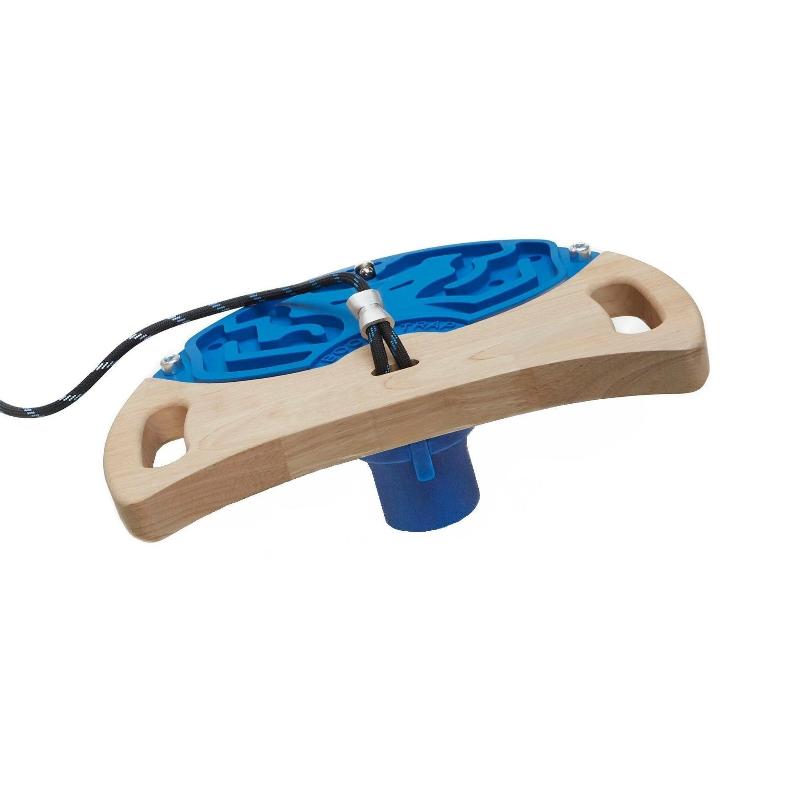
- wobble board (light)
Criteria:
→ stable single-leg stance
→ no pain during step-down
Phase 3 — Return-to-Climbing Load (6–12 weeks)
Goal: reintroduce dynamic load & multidirectional force.
Exercises:
- controlled jump → soft landing drill
- dynamic balance
- lateral hops
- climbing foot placements (precision)
- downclimbing from easy boulders
Criteria:
→ no pain when landing
→ solid lateral stability
→ no morning stiffness
→ full confidence when stepping on small holds
9. Return-to-Climbing Protocol
Step 1
Vertical routes, static movement only.
Step 2
Easy bouldering → controlled stepping.
Step 3
Downclimbing practice → soft landings.
Step 4
Small dynamic moves (hands only).
Step 5
Small dynamic moves to feet.
Step 6
Full bouldering with controlled falls.
Step 7
Highballs / comp-style dynamic movement.
If pain or instability returns → regress 1 step.
10. Long-Term Prehab (4–6 minutes)
- 10 peroneal raises (toes pointing inward)
- 10 single-leg balance reps
- 10 slow calf raises
- 10–15 controlled step-downs
- 5 soft landing drills
Strong peroneals + controlled landings = zero ankle sprains.
11. When to Seek Professional Help
- swelling that doesn’t improve
- ankle “giving way”
- deep joint pain
- pain above ankle joint
- inability to load weight
- significant bruising
High ankle sprains need imaging.