
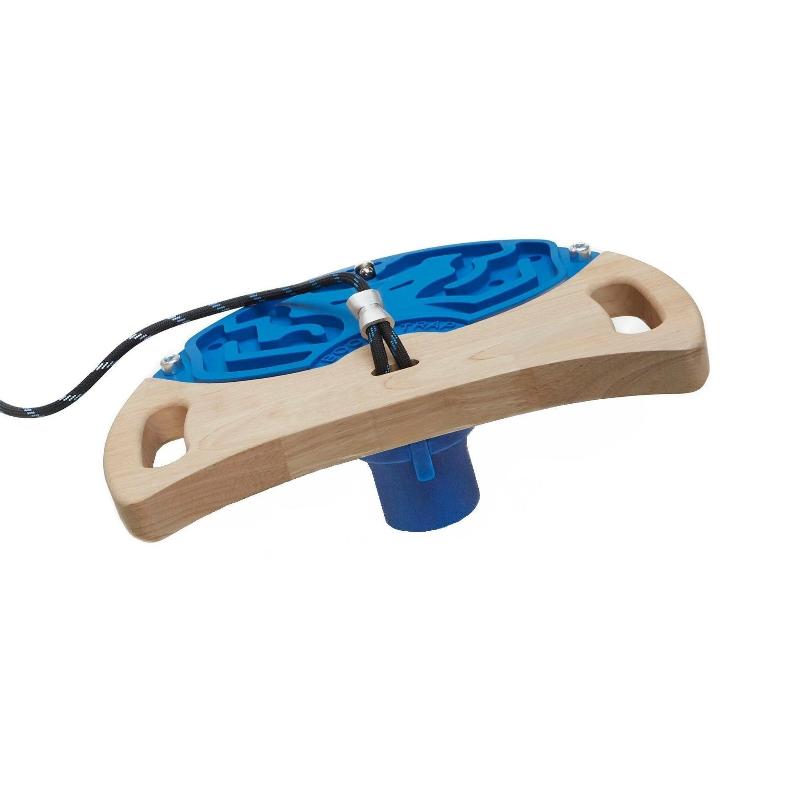


Forza delle dita
La forza delle dita determina una quota sproporzionata della prestazione nell’arrampicata — ma la maggior parte degli allenamenti fallisce perché i tendini si adattano solo a carichi stabili e ripetibili, non a picchi di intensità. Questa categoria spiega come sviluppare una vera e duratura forza delle dita attraverso meccaniche controllate e progressioni prevedibili.
Fundamentals
Repeatability: The Most Important Metric in Finger Training
Repeatability is the most important signal in finger training. A strong hang means nothing unless it can be reproduced. Repeatability shows tendon readiness, predicts injury risk, and determines whether a load will trigger real adaptation.
Intensity vs Volume in Finger Training: The Balance Most Climbers Get Wrong
Finger strength improves when intensity stresses the tendon and volume reinforces it — not when climbers spike load or chase max numbers. This article explains how to balance both to create predictable, repeatable adaptation.
How Tendons Really Adapt (And Why Most Climbers Rush It)
Tendons adapt far slower than muscles. Effective finger training requires stable, repeatable loads and consistent progression over weeks, not intensity spikes. This article explains how tendon remodeling works and why rushing the process limits progress and increases injury risk.
Finger Strength: Why Most Climbers Train It Wrong
Finger strength is often treated as simply adding weight or switching grips. This article explains why that approach fails and shows how force distribution, repeatability, and adaptation timelines form the real foundation of effective finger training.
Principles
Grip Position & Force Distribution: Why Joint Angle Matters More Than Load
Grip position affects tendon loading far more than weight does. Even small changes in joint angle alter stress distribution and fatigue patterns. A stable grip is the foundation of safe, predictable finger-strength training.
How to Monitor Force Consistency (Even Without Equipment)
You don’t need equipment to measure force consistency. By observing rep patterns, grip stability, and session-to-session behavior, you can see whether the tendon is adapting, overloaded, or ready to progress. Consistency is the backbone of safe finger training.
How to Choose Your Starting Load (And Why Most Climbers Choose Wrong)
Choosing a starting load isn’t about what you can hang once. It’s about selecting a repeatable, tendon-friendly weight that produces stable force with mild fatigue. This article explains how to choose the right load to ensure consistent progress.
Applications
How to Build an 8–12 Week Finger Strength Block (Safe Long-Term Progression)
A safe 8–12 week finger-strength block uses stabilization, slow progressive loading, and consolidation. Small load increases, stable volume, and consistent grip angles create durable tendon adaptation and predictable progress.
How to Choose Grip, Edge Size & Hang Duration (A Practical Guide for Real Sessions)
Use a half-crimp grip on a 15–22mm edge for 7–10 seconds. Perform 3 reps per set, 3–4 sets per session, twice per week, with 2–5% load increases only after stable performance. This template creates safe, predictable finger-strength gains.
How to Progress Load Without Overloading the Tendon
Increasing load safely requires stable reps, stable angles, and stable volume before each increase. Use small increments (2–5%), hold each increase for several sessions, and progress only when performance is predictable.
How to Build a 4-Week Finger Strength Progression (That Respects Tendon Timelines)
A 4-week finger-strength progression should build stability first, volume second, intensity third, and consolidate in week four. This structure respects tendon timelines and creates predictable, safe improvements.
La forza delle dita è una delle poche qualità fisiche nell’arrampicata in cui piccoli miglioramenti producono grandi guadagni di prestazione. Ma è anche l’area in cui gli arrampicatori commettono più errori evitabili. L’approccio comune — aggiungere peso, ridurre la dimensione degli appigli, o inseguire un singolo massimo hang — non riflette come i tendini si adattano realmente. I tendini si rimodellano lentamente, con cautela, e solo quando il carico che ricevono è prevedibile. Questo rende la stabilità, non l’intensità, il fulcro dello sviluppo efficace della forza delle dita.
Il principio centrale è la ripetibilità: la capacità di produrre una forza simile, con meccaniche simili, in condizioni simili. La ripetibilità indica se il tendine riceve uno stimolo coerente o reagisce a rumore. Se la prestazione varia, se gli angoli di presa cambiano, o se i modelli di affaticamento si spostano da sessione a sessione, il tendine interpreta il carico come imprevedibile e resiste all’adattamento. Quando il carico diventa stabile, il sistema nervoso affina il reclutamento, il tendine aumenta la sua tolleranza e la prestazione diventa più riproducibile.
Le meccaniche amplificano questo effetto. L’angolo di presa, la direzione della forza e l’allineamento delle articolazioni determinano come il carico si distribuisce tra pulegge, articolazioni e il sistema flessore. Anche pochi gradi di variazione possono modificare drasticamente lo stress. Comprendere queste relazioni meccaniche è essenziale per progredire in sicurezza, scegliere carichi iniziali appropriati e interpretare il comportamento della forza durante l’allenamento. Una presa stabile fa più per l’adattamento a lungo termine di qualsiasi quantità di peso aggiuntivo.
Il progresso a lungo termine segue uno schema semplice: stabilizzare → accumulare → intensificare → consolidare. Prima si stabiliscono meccaniche coerenti e output prevedibili. Poi si accumula volume a carichi stabili. Solo quando la prestazione diventa riproducibile si introducono piccoli aumenti di carico. Infine si consolida il nuovo carico finché diventa la nuova base stabile. Che si tratti di una progressione breve o di un ciclo di allenamento di più settimane, questa struttura è in linea con il modo in cui i tendini si adattano e si riprendono.
La forza delle dita non esiste isolata. È governata dagli stessi principi di adattamento descritti in Metodologia di Allenamento, e si basa sui vincoli anatomici spiegati in Anatomia e Fisiologia. Comprendere questi sistemi rende l’allenamento della forza delle dita più trasparente, sicuro e molto più prevedibile.
Questa categoria esplora i meccanismi, le meccaniche e le strutture pratiche che rendono la forza delle dita una qualità allenabile e misurabile. L’obiettivo è semplice: sostituire l’inseguimento dell’intensità con un carico controllato e riproducibile che produca un adattamento reale e duraturo — e dita più forti sulla parete.