
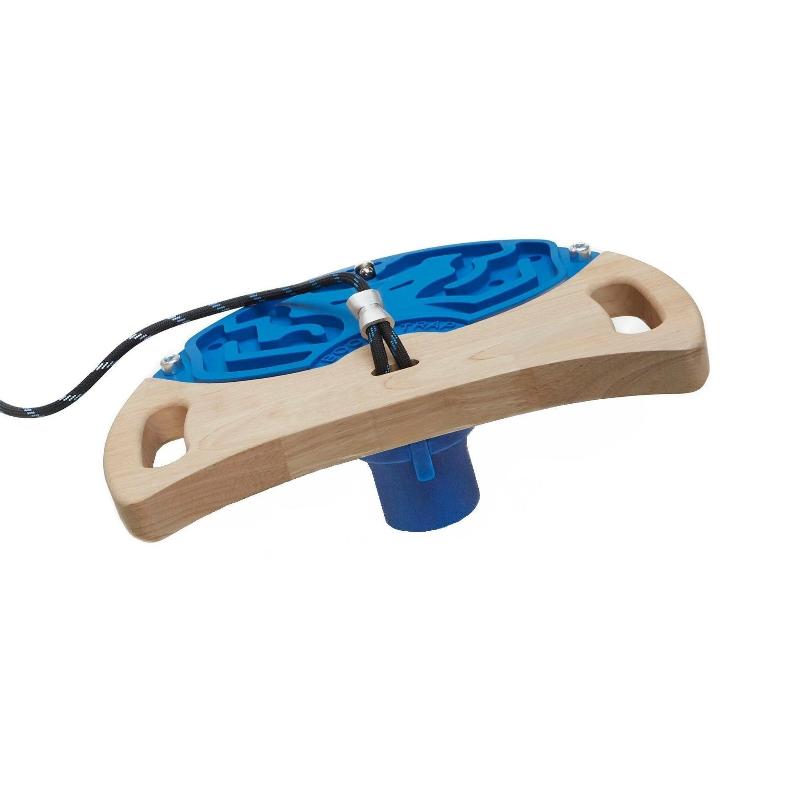


Finger Strength
Finger strength drives a disproportionate amount of climbing performance — but most training fails because tendons only adapt to stable, repeatable loading, not intensity spikes. This category explains how to build real, durable finger strength through controlled mechanics and predictable progression.
Fundamentals
Repeatability: The Most Important Metric in Finger Training
Repeatability is the most important signal in finger training. A strong hang means nothing unless it can be reproduced. Repeatability shows tendon readiness, predicts injury risk, and determines whether a load will trigger real adaptation.
Intensity vs Volume in Finger Training: The Balance Most Climbers Get Wrong
Finger strength improves when intensity stresses the tendon and volume reinforces it — not when climbers spike load or chase max numbers. This article explains how to balance both to create predictable, repeatable adaptation.
How Tendons Really Adapt (And Why Most Climbers Rush It)
Tendons adapt far slower than muscles. Effective finger training requires stable, repeatable loads and consistent progression over weeks, not intensity spikes. This article explains how tendon remodeling works and why rushing the process limits progress and increases injury risk.
Finger Strength: Why Most Climbers Train It Wrong
Finger strength is often treated as simply adding weight or switching grips. This article explains why that approach fails and shows how force distribution, repeatability, and adaptation timelines form the real foundation of effective finger training.
Principles
Grip Position & Force Distribution: Why Joint Angle Matters More Than Load
Grip position affects tendon loading far more than weight does. Even small changes in joint angle alter stress distribution and fatigue patterns. A stable grip is the foundation of safe, predictable finger-strength training.
How to Monitor Force Consistency (Even Without Equipment)
You don’t need equipment to measure force consistency. By observing rep patterns, grip stability, and session-to-session behavior, you can see whether the tendon is adapting, overloaded, or ready to progress. Consistency is the backbone of safe finger training.
How to Choose Your Starting Load (And Why Most Climbers Choose Wrong)
Choosing a starting load isn’t about what you can hang once. It’s about selecting a repeatable, tendon-friendly weight that produces stable force with mild fatigue. This article explains how to choose the right load to ensure consistent progress.
Applications
How to Build an 8–12 Week Finger Strength Block (Safe Long-Term Progression)
A safe 8–12 week finger-strength block uses stabilization, slow progressive loading, and consolidation. Small load increases, stable volume, and consistent grip angles create durable tendon adaptation and predictable progress.
How to Choose Grip, Edge Size & Hang Duration (A Practical Guide for Real Sessions)
Use a half-crimp grip on a 15–22mm edge for 7–10 seconds. Perform 3 reps per set, 3–4 sets per session, twice per week, with 2–5% load increases only after stable performance. This template creates safe, predictable finger-strength gains.
How to Progress Load Without Overloading the Tendon
Increasing load safely requires stable reps, stable angles, and stable volume before each increase. Use small increments (2–5%), hold each increase for several sessions, and progress only when performance is predictable.
How to Build a 4-Week Finger Strength Progression (That Respects Tendon Timelines)
A 4-week finger-strength progression should build stability first, volume second, intensity third, and consolidate in week four. This structure respects tendon timelines and creates predictable, safe improvements.
Finger strength is one of the few physical qualities in climbing where small improvements produce large performance gains. But it is also the area where climbers make the most avoidable mistakes. The common approach — adding weight, reducing edge size, or chasing a single maximal hang — does not reflect how tendons actually adapt. Tendons remodel slowly, cautiously, and only when the loading they receive is predictable. This makes stability, not intensity, the core of effective finger-strength development.
The central principle is repeatability: the ability to produce similar force, with similar mechanics, under similar conditions. Repeatability indicates whether the tendon is receiving a coherent stimulus or reacting to noise. If output fluctuates, if grip angles vary, or if fatigue patterns shift from session to session, the tendon interprets the load as unpredictable and resists adaptation. When loading becomes stable, the nervous system refines recruitment, the tendon increases its tolerance, and performance becomes more reproducible.
Mechanics amplify this effect. Grip angle, force direction, and joint stacking determine how load is distributed across pulleys, joints, and the flexor system. Even a few degrees of variation can shift stress dramatically. Understanding these mechanical relationships is essential for progressing safely, choosing appropriate starting loads, and interpreting force behavior during training. A stable grip does more for long-term adaptation than any amount of additional weight.
Long-term progress follows a simple pattern: stabilize → accumulate → intensify → consolidate. First you establish consistent mechanics and predictable output. Then you accumulate volume at stable loads. Only once performance becomes reproducible do you introduce small load increases. And finally you consolidate the new load until it becomes the new stable baseline. Whether in a short progression or a multi-week training block, this structure aligns with how tendons adapt and recover.
Finger strength does not exist in isolation. It is governed by the same adaptation principles described in Training Methodology, and it relies on the anatomical constraints explained in Anatomy & Physiology. Understanding these systems makes finger-strength training more transparent, safer, and far more predictable.
This category explores the mechanisms, mechanics, and practical structures that make finger strength a trainable, measurable quality. The goal is simple: to replace intensity-chasing with controlled, reproducible loading that produces real, durable adaptation — and stronger fingers on the wall.