

Crash Pads
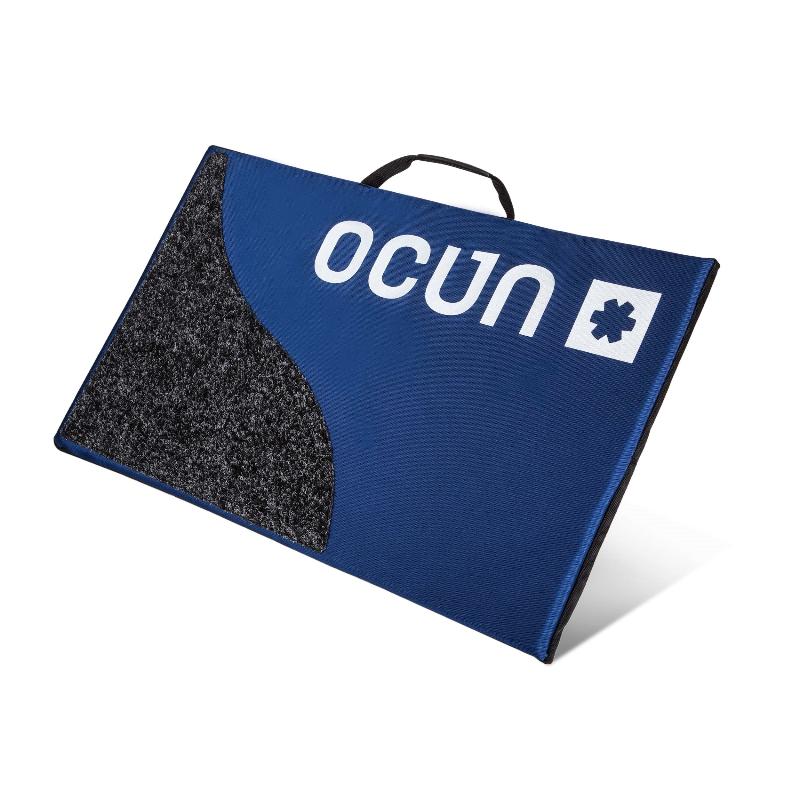
A crash pad is simple in concept and surprisingly complex in practice. The difference between a good landing and a bad one often comes down to foam construction, hinge design, and whether the pad actually covers the ground you need it to.
The main decision: size and foam
Crash pads differ on two things that actually matter:
- Size — bigger is safer for highball and wide landings, but heavier to carry and harder to position precisely on uneven terrain
- Foam construction — most quality pads use a dual-layer system: firm foam on the bottom to prevent bottoming out, softer foam on top for impact absorption. Single-layer foam pads are cheaper and worse.
Taco vs hinge design
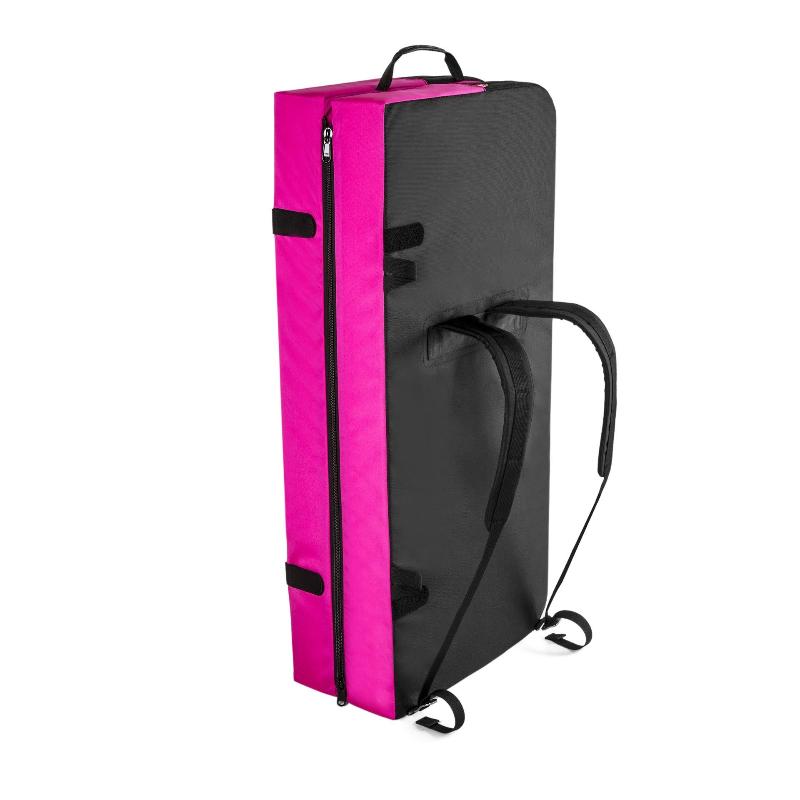
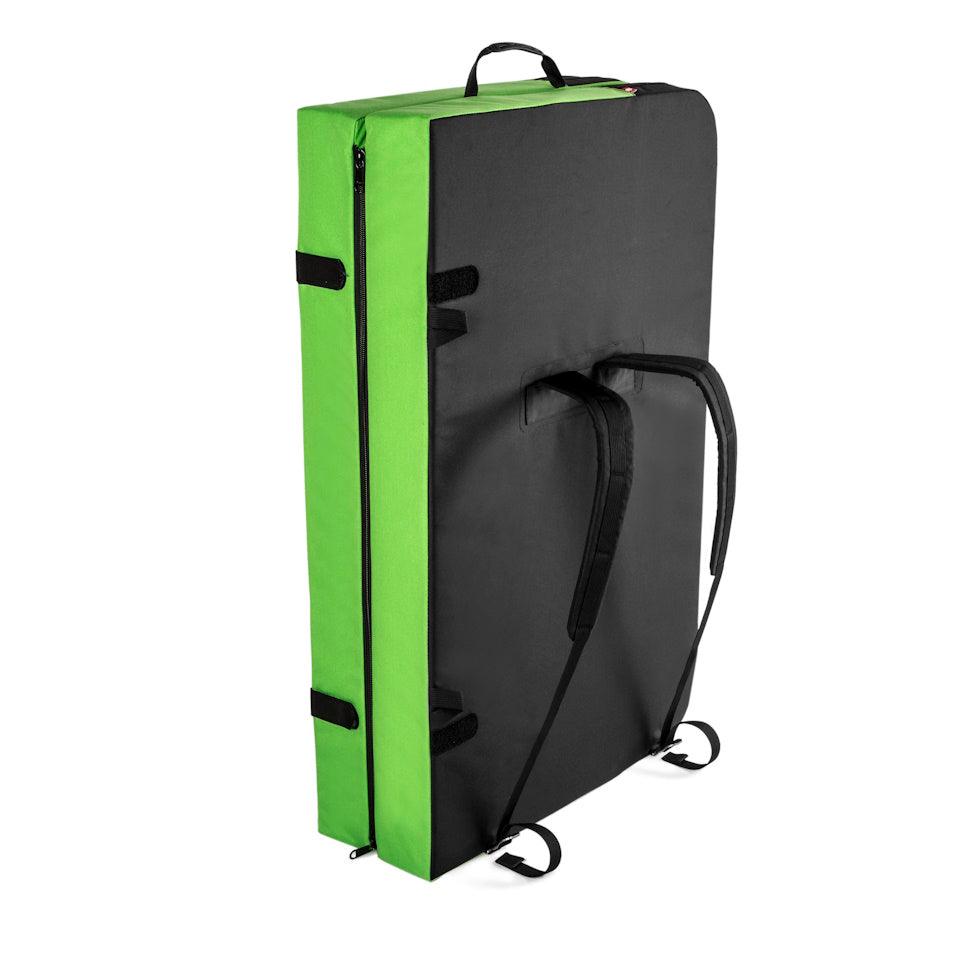
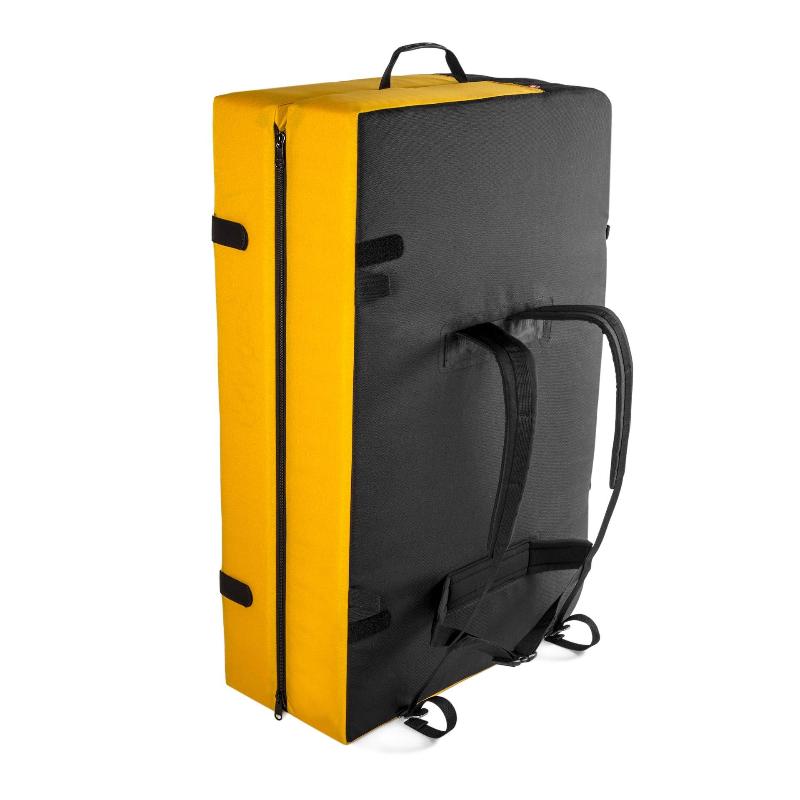
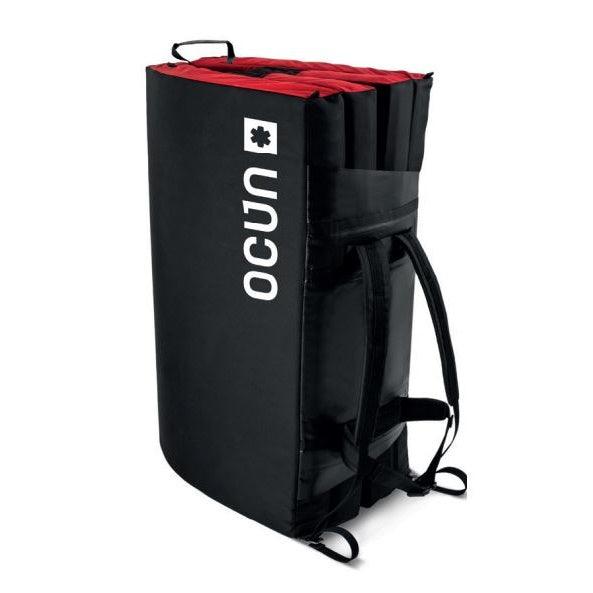
- Taco pads fold in half lengthwise — compact, easy to carry, good for smaller landings
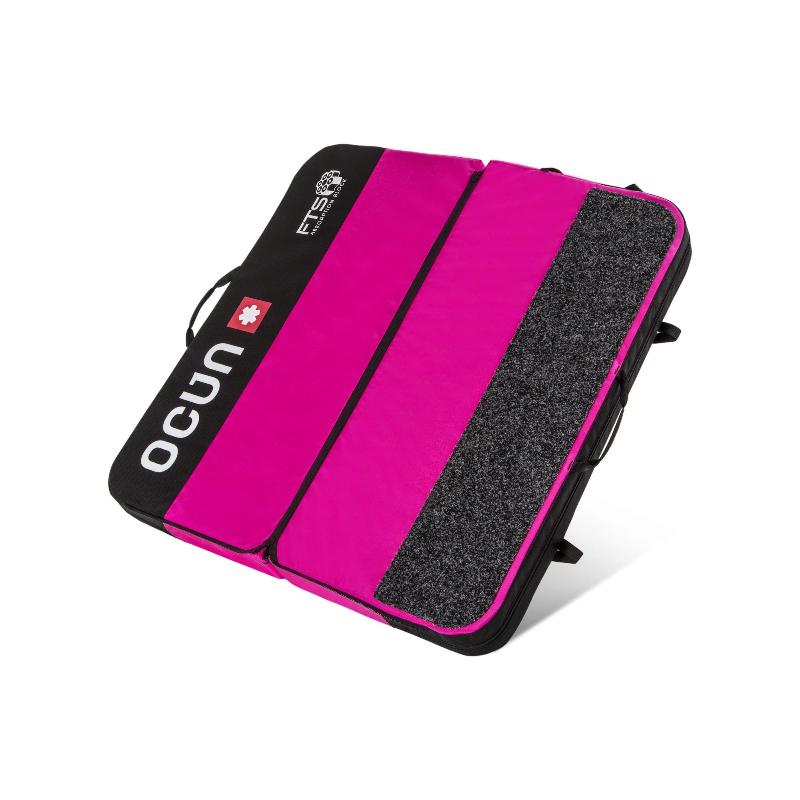
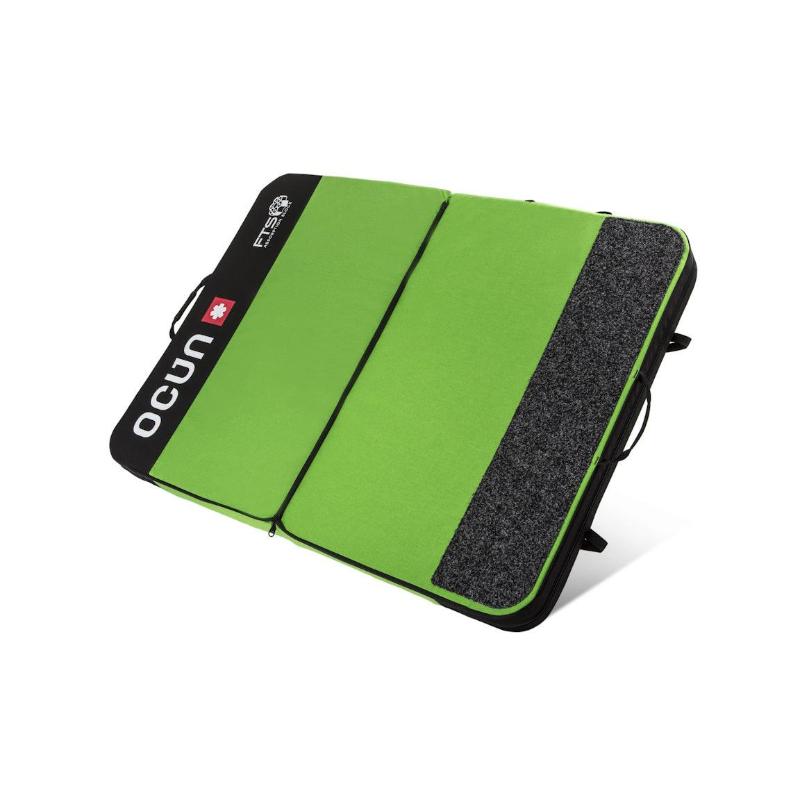
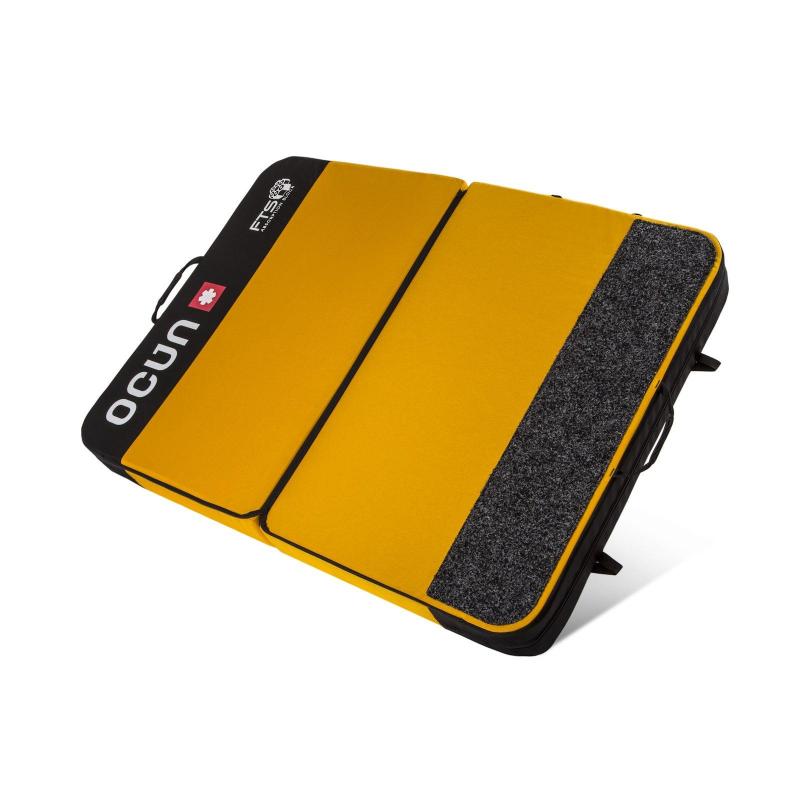
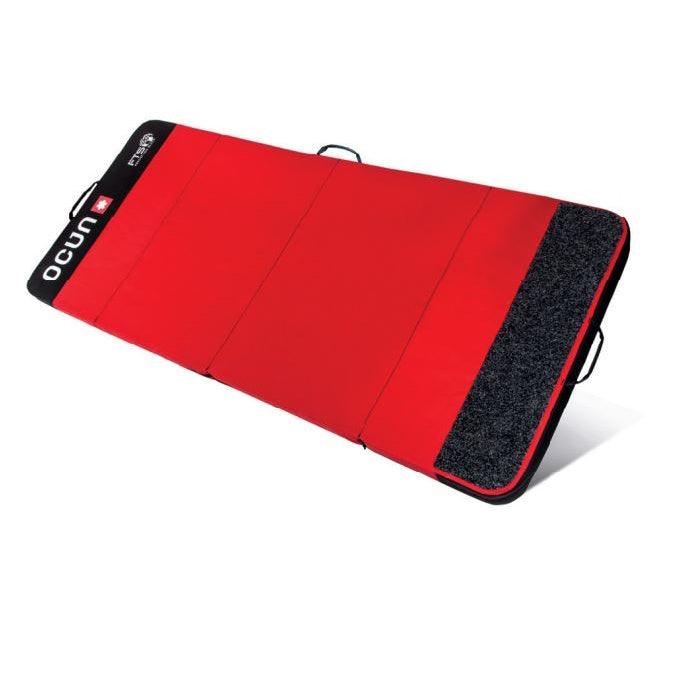
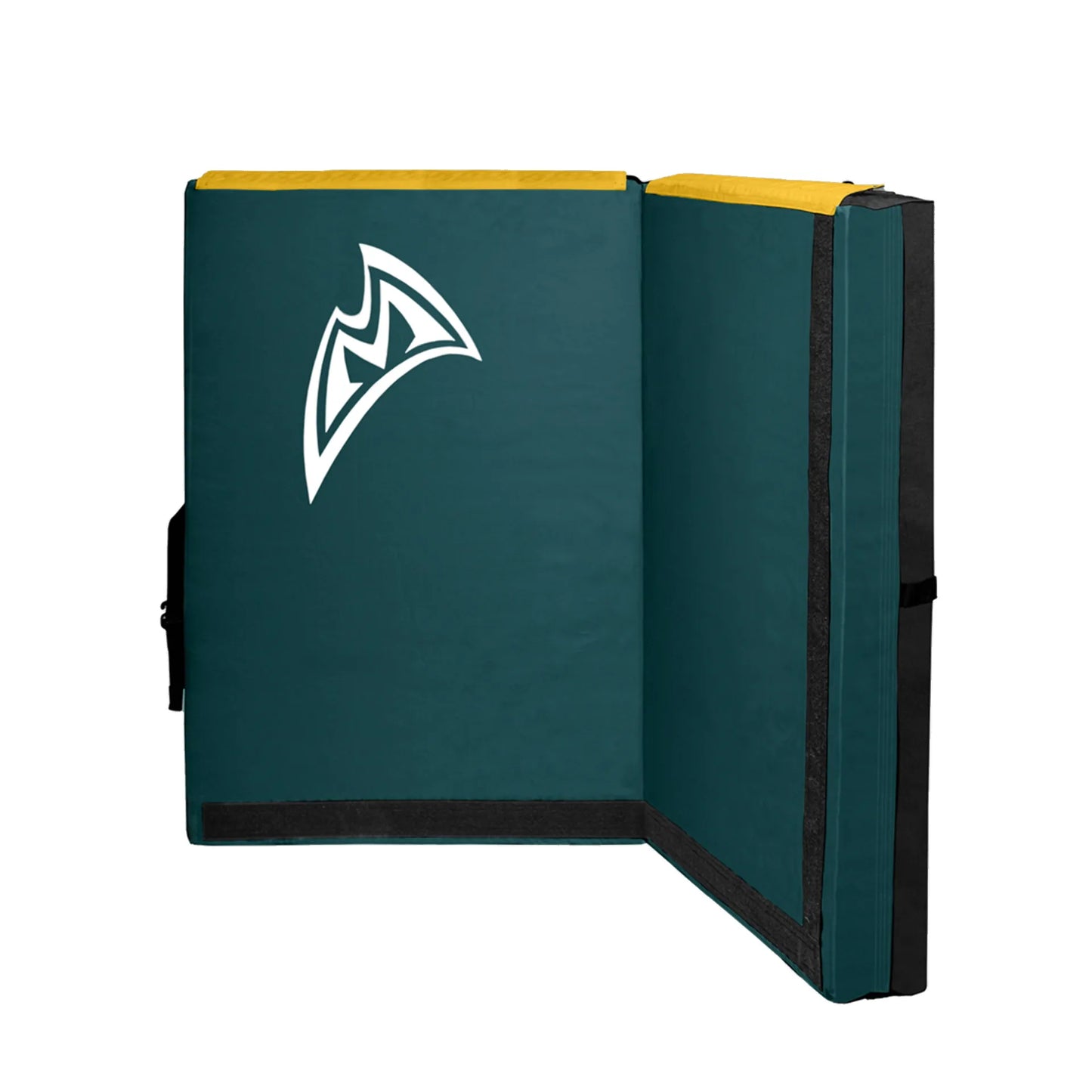
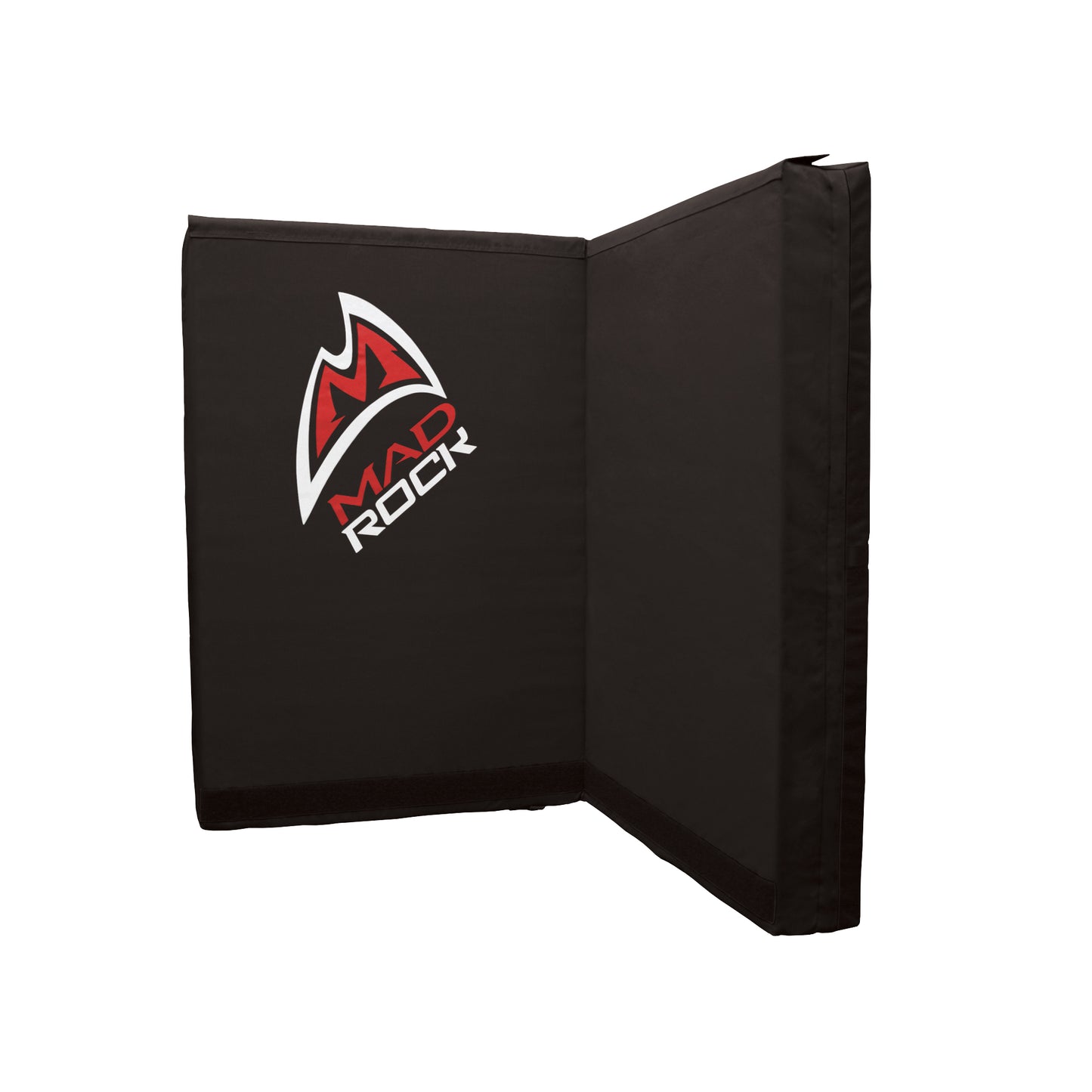
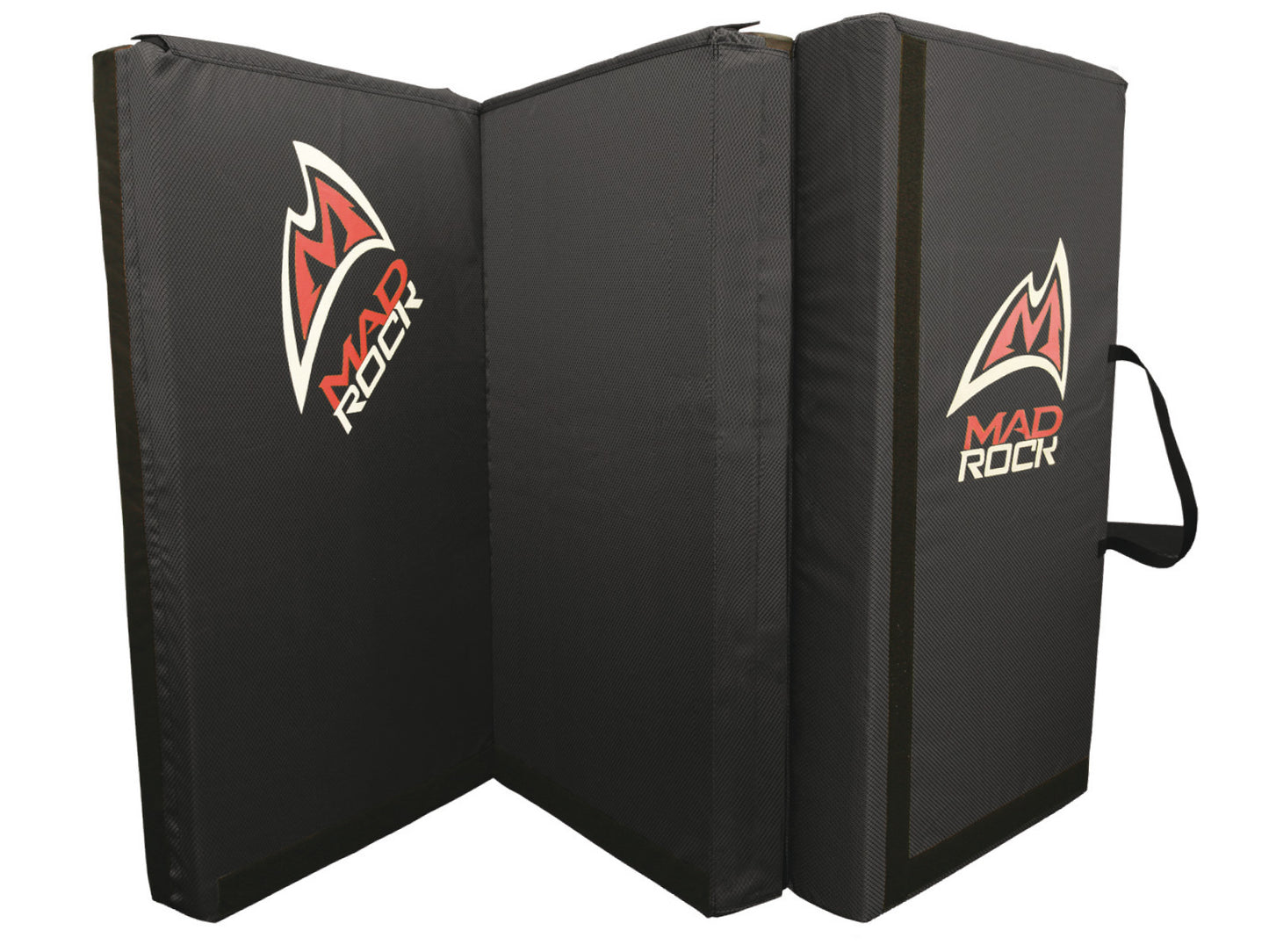
- Hinge pads fold flat — better coverage on uneven ground, the hinge fills the gap that taco folds leave open
For most bouldering, a hinge pad is the more practical choice. For travel and single-pad setups, a taco is easier to manage.
How many pads do you need?
One good pad covers most indoor and low-consequence outdoor bouldering. For highball or committing outdoor problems, two pads with overlapping coverage is the standard setup. The hinge design becomes especially important here — gaps between pads are where ankles get hurt.
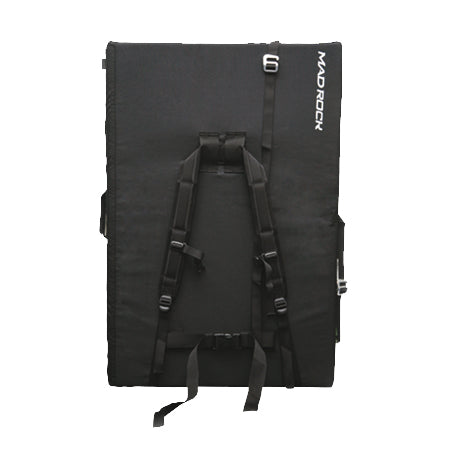
Browse the collection below. Each product page covers the specific foam spec, dimensions, and carry system.