
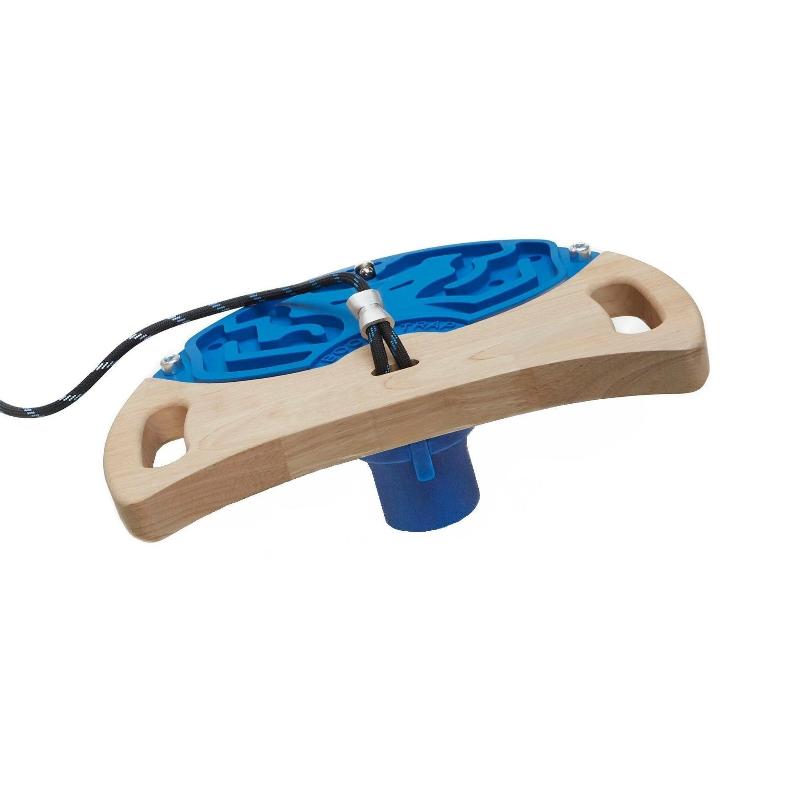


Weighted pinch tools — blocks, cylinders, bricks and plates — train lateral force production, open-hand tension and torque stability in ways edge training cannot. They strengthen the thumb–finger system, improve wrist control and build compression strength for slopers, volumes and wide holds. But their transfer to edge performance is limited. This article explains when pinch tools are essential — and when they are not.

Most climbers do not need more tools. They need clearer stimulus. A training tool becomes necessary only when a specific limitation cannot be solved with existing exposure. Equipment should solve bottlenecks — not create the illusion of progress.

More features do not create more adaptation. In training equipment, complexity often reduces overload clarity and increases fatigue noise. The most effective tools are usually simple — because they preserve measurable stress.

Some tools build force precisely but transfer imperfectly. Others transfer beautifully but blur overload. The question is not which tool is best — but which position on the isolation–integration spectrum matches your current limitation.

Antagonist training does not directly increase climbing performance. It increases durability. Extensor trainers, push-based tools and scapular devices do not raise your ceiling — they reduce structural fragility. In advanced climbers, that distinction becomes decisive.

Hand grippers build crushing strength — but climbing is rarely a crushing task. While grippers can increase forearm hypertrophy and neural drive, their transfer to edge performance is limited. Used strategically, they have value. Used blindly, they create noise.

Rolling handles and thick bars do not replicate slopers. They remove mechanical locking and force the forearm to stabilize under instability. Used correctly, they develop open-hand recruitment and torque control — two critical components of sloper performance.

Climbers obsess over finger flexion but ignore rotational control. Yet many elbow issues and unstable grips originate from poor pronation–supination strength. Rotational tools do not increase edge strength directly — they increase torque control and structural resilience.