


1. Why Warming Up Prevents Injuries (The Real Reason)
Climbers think warm-ups “increase blood flow.”
True — but biomechanically incomplete.
A warm-up prepares tissues for force, specifically:
1. Tendon stiffness increases
Stiffer tendons → less deformation → lower injury risk.
2. Neuromuscular control improves
Better recruitment → better force direction → safer mechanics.
3. Joint alignment resets
Scapula, wrist, and hip position become stable under load.
4. Tissue temperature rises
This reduces friction in tendon sheaths → less irritation.
5. Force production ramps gradually
No sudden spikes that damage pulleys or elbows.
A warm-up is a mechanical preparation system, not cardio.
2. The Four Phases of a Climbing Warm-Up
Every effective warm-up includes:
Phase 1 — Global Movement (2–4 min)
Purpose: raise temperature + wake up stabilizers.
Examples:
- easy jogging
- rowing machine
- skipping
- dynamic full-body mobility
- wrist circles, shoulder mobility, hip openers
Not exhaustive — just to get “moving.”
Phase 2 — Joint Positioning & Stability (2–4 min)
Purpose: align joints to prevent force drift.
Key targets:
- scapula (retraction, depression, upward rotation)
- shoulders (external rotation)
- wrists (neutral, extension control)
- hips (external + internal rotation mobility)
Exercises:
- scapular push-ups
- scapular pull-ups
- wall slides
- YTWL
- wrist extension/flexion
- hip rotation mobility
This phase eliminates “bad force angles,” the root of most injuries.
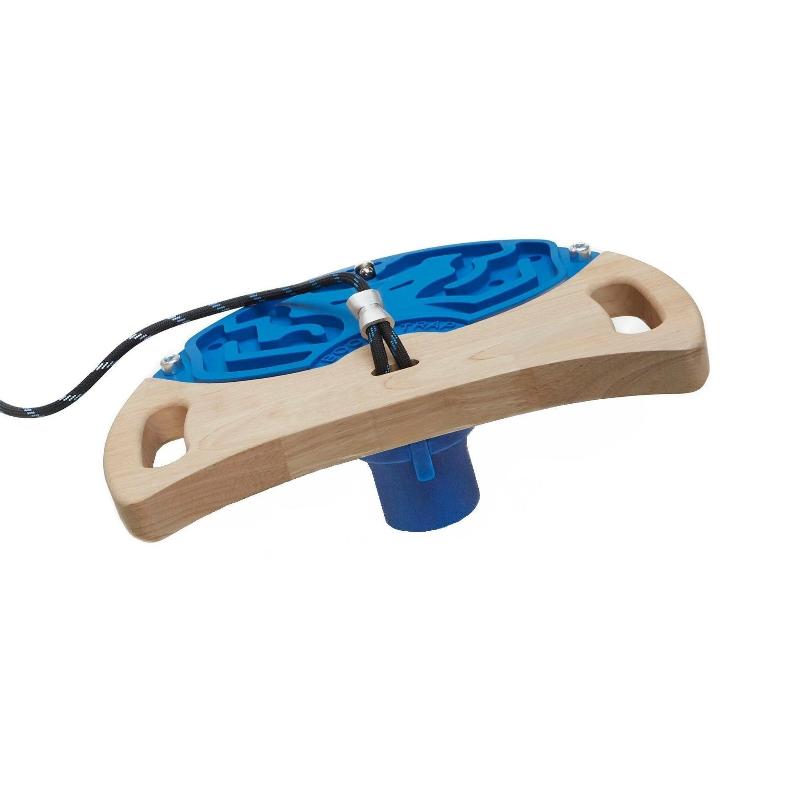
Phase 3 — Finger & Tendon Activation (2–4 min)
Purpose: prepare pulleys, flexors, extensors and tendon sheaths.
Includes:
- finger curls
- low-intensity half-crimp holds
- open-hand activations
- light recruitment pulls
- rubber band finger extensions
Load should be 20–40% of max — just enough to activate, not fatigue.
This phase is non-negotiable for injury prevention.
Phase 4 — Climbing-Specific Load Ramp (3–6 min)
Purpose: gradually increase climbing force.
Progression:
- large jugs
- medium edges
- feet-only movements
- easy boulders
- harder moves with perfect control
- last: tension-based moves (compression, sidepulls, slopers)
- You should feel:
- tendons awake
- movement clean
- fingers precise
- shoulders stable
- no “gritty” sensations
If something feels unstable → stay in this phase longer.
3. The 10-Minute “Perfect Minimalist Warm-Up”
For climbers short on time:
1. 90 seconds cardio/mobility
- light jog
- rowing
- mobility flow
2. 90 seconds scapular control
- 10 scapular pull-ups
- 10 scapular push-ups
- 10 wall slides
3. 90 seconds finger activation
- 3 light hangs (20–40% load)
- 10 finger curls
- 10 rubber-band extensions
4. 90 seconds shoulder/wrist prep
- external rotation
- wrist extension
- wrist pronation/supination
5. 2–3 minutes climbing ramp-up
- jugs → medium holds → easy boulders
This 10-minute system prevents most finger, shoulder, elbow and wrist injuries.
4. The “Red Flag” Signs You’re Not Warmed Up
If any of these appear during early climbing, you’re not actually warmed up:
- fingers feel “sloppy”
- shoulders feel unstable
- early pump
- pain on first crimp
- wrist collapsing
- hips feel stiff
- precision is low
- scapula drifts during pulling
These are mechanical warnings — stop and reset the warm-up.
5. Why Warming Up Should Change Based on Session Type
You warm up differently depending on what’s coming:
Max Strength Session
- longer finger activation
- more scapular stability drills
- minimal fatigue
Power/Dyno Session
- more dynamic warm-up
- hip + shoulder mobility
- landing mechanics activation
Volume/Endurance Session
- more general movement
- less finger recruitment
- smoother ramp-up
Sloper/Compression Session
- heavy focus on wrist stability
- scapula upward rotation
- serratus activation
Warm-ups are specific — never generic.
6. Why Most Climbers Warm Up Incorrectly
Common errors:
- jumping straight to small holds
- “one easy boulder” → then sending
- skipping scapular mechanics
- skipping wrist control
- passive stretching (bad for tendon readiness)
- warm-up that causes fatigue
- fast jumps in intensity
- not warming up movement patterns they’ll actually use
Warm-up is about priming, not proving.
7. How to Know You Are Ready to Climb Hard
Before you start a real session, you should feel:
- fingers precise
- scapula stable
- shoulders controlled
- wrist neutral and reliable
- hips free to rotate
- no tension or pinching
- coordinated movement
If any system feels off → extend warm-up 2–3 minutes until stable.
Your body always tells you when it’s not ready.