
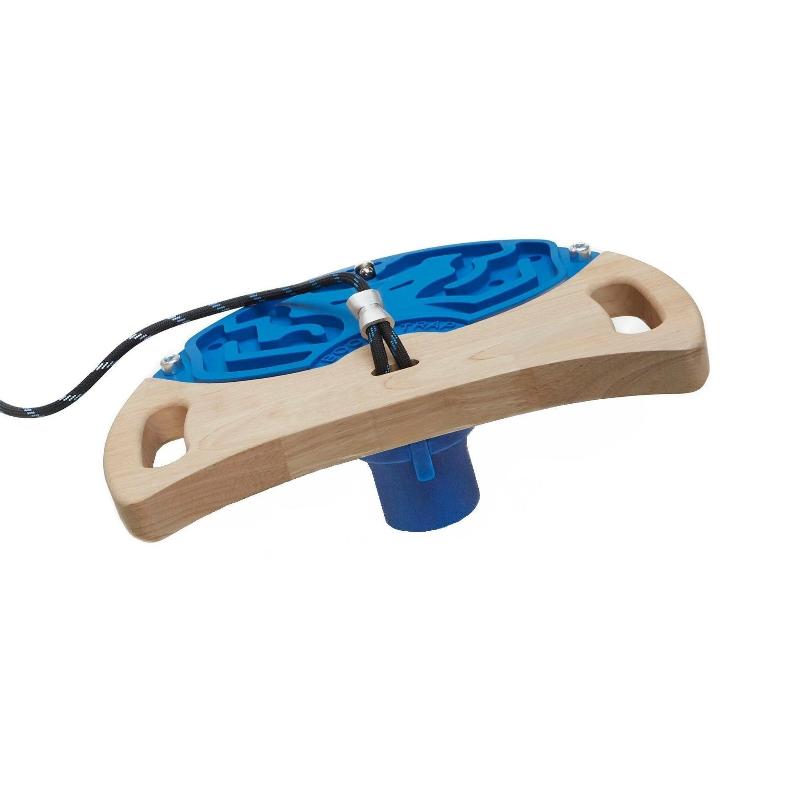


Pinch strength is often trained randomly.
Different blocks, different widths, different textures.
That variability feels useful — but it makes progression unreliable.
Pinch strength improves the same way as crimp strength:
through controlled, repeatable load progression
If your setup doesn’t allow that, the tool doesn’t matter.
The constraint
To build pinch strength, you need:
- a fixed pinch width
- measurable load
- repeatability
If one changes between sessions, progression becomes unclear.
Width is not progression
Using a wider or narrower pinch is not a clean overload.
It changes:
- thumb position
- finger engagement
- friction demands
So different widths are different stimuli, not progression.
Progression comes from load, not from switching blocks.
What your setup must do
A valid pinch setup must:
- keep the width constant
- allow direct loading
- stay stable under load
If the block rotates, slips, or shifts, the stimulus changes.
The reality of available tools
Pinch blocks
Most pinch blocks are usable — but only under one condition:
they must allow direct, measurable loading
That means:
- attaching weight directly
- adjusting in small steps
- reproducing the same setup every session
Without that, you’re just guessing intensity.
Load-based system (required)
Pinch training only becomes structured when you control load directly.
You need:
- a fixed pinch block
- a loading system
- adjustable weight
Example components:
- pinch block → Workshop 19/50 pinch blocks
- loading system → Golden Grip Loading Pin
- progression → fractional plates
- Data & Precision → Tindeq Progressor
That is the system.
What fails
Most people rely on:
- holding a block attached to bodyweight
- using gym pinches with no load control
- switching between different widths
These approaches feel hard —
but they don’t allow measurable progression.
Precision
Pinch strength is highly sensitive to:
- friction
- skin condition
- small load differences
So progression needs to be tight.
Tools like the Tindeq Progressor can help measure output,
but only if the setup is already consistent.
The decision
There is no meaningful difference between “types” of pinch blocks.
The only question is:
Can this setup give me a fixed width and a measurable load?
If yes → it works
If not → it doesn’t
One tool vs variation
Different pinch widths have value.
But using them randomly removes progression.
Use variation intentionally —
not as a substitute for structure.
Training
Once the setup is correct:
-
max lifts → maximal strength
- controlled volume → progression