
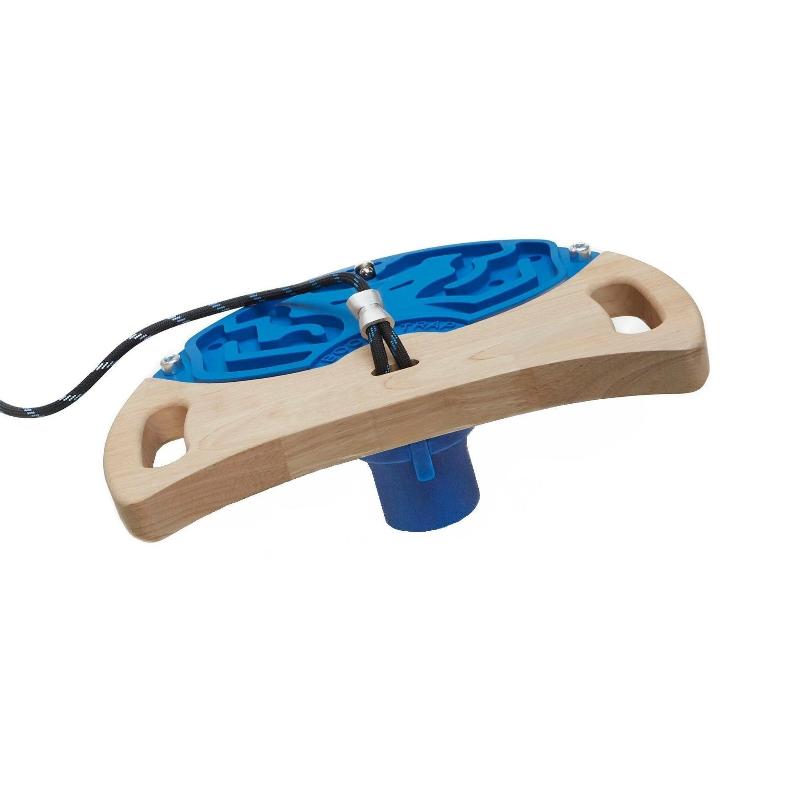


Finger Testing Protocol (Basic)
This protocol determines your current finger strength using a controlled max hang.
Goal: establish a reliable baseline you can repeat over time.
Protocol
| Step | What to do |
|---|---|
| Edge | Use a 20 mm edge (or closest available) |
| Grip | Half crimp (standardised) |
| Warm-up | Do 2–3 easy progressive hangs |
| Load | Adjust weight so you reach max effort at 7–10s |
| Execution | Perform 1 max hang (7–10s) |
| Attempts | Do 2–3 attempts, best result counts |
| Rest | 3–5 min between attempts |
Rules
| Situation | Action |
|---|---|
| Hold >12s | Too easy → add weight |
| Fail <5s | Too heavy → reduce load |
| Grip or form changes | Invalid attempt → repeat |
| Pain or discomfort | Stop immediately |
Result
| What to record | Why |
|---|---|
| Total load (bodyweight + added weight) | Your strength baseline |
| Edge size used | Must stay consistent |
| Grip type | Must stay consistent |
| Hold time | Confirms correct intensity |
👉 This number is your reference point for training and progression
Progression / Retesting
| When | What to do |
|---|---|
| Every 2–4 weeks | Repeat the exact same test |
| If result improves | Adjust training loads |
| If inconsistent | Keep load stable and retest |
What this actually measures
- Max finger strength (practical baseline)
- Readiness for higher intensity training
- Progress over time (if standardised)
Learn more
Use with
- Hangboards
- Portable edges
- Added weight (optional)
Max Climbing Verdict
Basic finger testing gives you a simple, repeatable baseline without needing specialised tools.
- High value if done consistently
- Only useful if conditions stay identical
- Accuracy depends on strict execution
👉 Essential starting point before structured training.
Related protocols
- Max Hangs → “for max strength”
- Repeaters → “for endurance”
- Density Hangs → “for volume-based strength”