

What a Strength Block Actually Is
A strength block is a focused period where:
- Neural recruitment is prioritized
- High-intensity force production is repeated
- Structural tissues are progressively exposed
- Fatigue is tightly managed
It is not:
- Random limit climbing
- Daily max hangs
- Training until exhausted
The goal is force capacity increase — not fatigue tolerance.
Step 1: Define the Strength Target
Before programming, define:
- Edge size?
- Grip type? (half crimp, open hand, 3-finger drag)
- Angle? (steep board, vertical)
- External load? (weighted hangs, added resistance)
Strength is specific.
If your goal is:
- Steep board power → emphasize high recruitment on steep angles
- Small edge tolerance → emphasize controlled max hangs
- Lock-off strength → add high-intensity pulling variations
Clarity prevents diluted stimulus.
Step 2: Frequency
For most intermediate to advanced climbers:
2 strength sessions per week
is sufficient and recoverable.
Advanced climbers may tolerate 3 —
but only if volume per session is reduced.
Strength requires freshness.
If sessions interfere with each other, frequency is too high.
Step 3: Session Structure
A typical strength session:
1. Warm-Up (15–20 min)
- Progressive finger loading
- Submaximal pulls
- Movement rehearsal
Never rush intensity.
2. Primary Strength Work (30–40 min)
Choose one:
- Max hangs (85–95% effort)
- Limit bouldering (true limit, long rest)
- Weighted pulling variations
Key parameters:
- 4–8 high-quality sets
- 2–3 minutes rest minimum
- Stop when output drops
Once intensity falls, adaptation signal drops.
3. Secondary Support (Optional)
Low-volume structural support:
- Controlled repeater sets
- Isometric holds
- Scapular stability work
Keep it minimal.
Remember the Minimum Effective Dose.
Step 4: Progression Model
Over 6–8 weeks, progression must be measurable.
Options:
- Increase external load (small increments)
- Decrease edge size
- Increase time under tension slightly
- Increase movement complexity
Do not increase everything at once.
One primary variable at a time.
A Simple 8-Week Model
Weeks 1–2: Exposure Phase
- Moderate-high intensity
- Conservative volume
- Focus on technique under load
Goal: establish baseline tolerance.
Weeks 3–5: Overload Phase
- Small intensity increase
- Stable volume
- High quality emphasis
Goal: push neural adaptation.
Week 6: Peak Intensity
- Slightly higher intensity
- Reduced volume
- Protect output quality
Goal: maximize recruitment without excessive fatigue.
Week 7: Deload
- Reduce volume by 40–60%
- Maintain moderate intensity
- Preserve neural sharpness
Goal: allow structural consolidation.
Week 8: Performance Test
- Reassess baseline metrics
- Test edge, load or board performance
Progress should be measurable.
If not, evaluate:
- Recovery
- Dose
- Intensity progression
Not effort.
Managing Fatigue Inside the Block
Warning signs of overload:
- Persistent finger stiffness
- Loss of explosiveness
- Performance inconsistency
- Joint irritation
If these appear:
- Reduce volume first
- Maintain intensity
- Increase rest days
Do not immediately increase effort.
Integrating With Climbing
During a strength block:
- Limit endurance work
- Keep skill sessions submaximal
- Avoid high-volume capacity circuits
You are prioritizing neural and structural stress.
Everything else must support that.
When to End a Strength Block
End when:
- Progress stalls despite recovery
- Structural fatigue accumulates
- Intensity cannot increase further
- Performance goals shift
Strength blocks are phases — not permanent states.
The Core Principle
A strength block works because:
- Stimulus is clear
- Fatigue is controlled
- Progression is measured
- Recovery is protected
Strength improves when intensity is precise and sustainable.
Chaos produces noise.
Architecture produces adaptation.
Apply this in practice
- For higher intensity work → follow the Max Hangs Protocol
Tools that match this approach
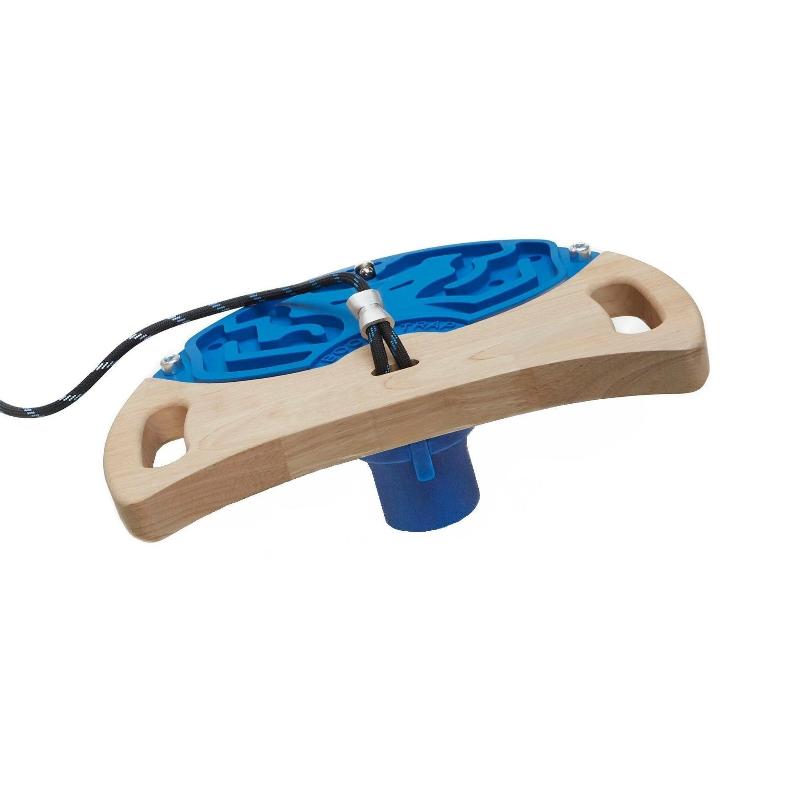
Hangboards — for controlled, repeatable edge loading
Portable edges — for progressive loading with added weight
Loading pin — to precisely control intensity across all tools