

The Misunderstanding Around Antagonist Training
Climbers often hear:
“Train your antagonists.”
But few ask:
For what purpose?
Antagonistic tools typically target:
- Finger extensors
- Wrist extensors
- Triceps
- Scapular stabilizers
- Posterior shoulder musculature
These muscles do not directly generate climbing force.
They regulate and balance it.
What Antagonist Tools Actually Do
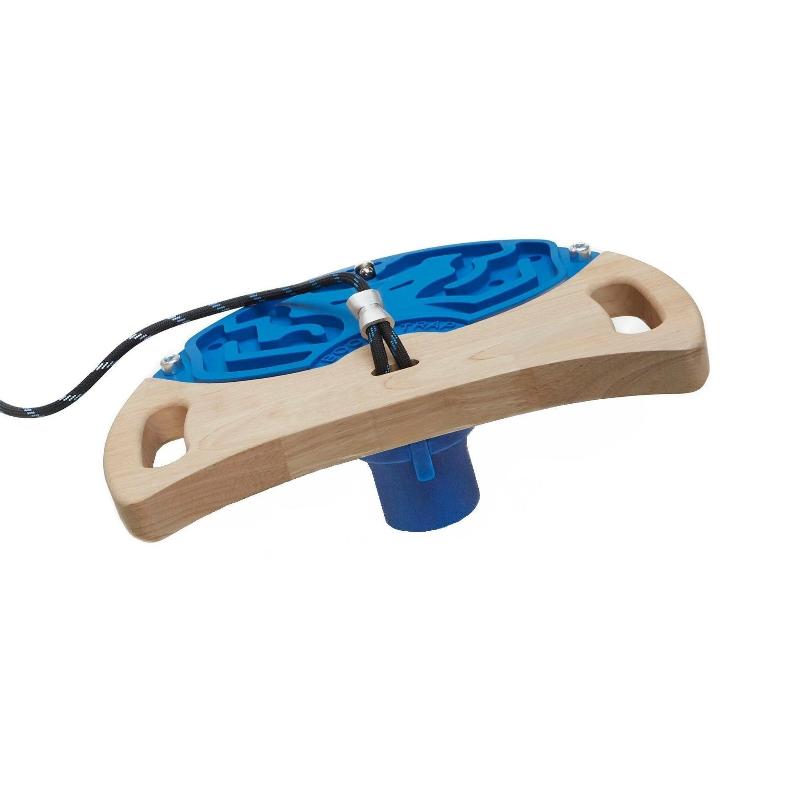
Extensor bands, push devices and scapular tools primarily:
- Improve joint balance
- Increase tissue tolerance
- Reduce chronic overload patterns
- Improve shoulder positioning
They influence:
- Load distribution
- Recovery capacity
- Volume tolerance
They are structural capacity tools.
Not force output tools.
Why They Matter More as You Get Stronger
As force production increases:
- Tendon strain rises
- Joint stress accumulates
- Imbalances become amplified
A beginner may tolerate imbalance.
An advanced climber generating high force cannot.
The stronger you get,
the more fragile the system becomes without structural balance.
Finger Extensors: The Overlooked Counterforce
Finger flexors dominate climbing.
Without sufficient extensor strength:
- Tendon loading becomes asymmetrical
- Joint compression increases
- Recovery slows
- Chronic irritation accumulates
Extensor training does not increase grip strength directly.
But it improves the environment in which grip strength develops.
Shoulder & Scapular Balance
Climbing biases:
- Internal rotation
- Protraction
- Downward pulling
Without antagonist reinforcement:
- Shoulder positioning degrades
- Elbow torque increases
- Impingement risk rises
Scapular stability tools improve:
- Force transfer
- Joint alignment
- Long-term durability
They indirectly protect performance.
The Performance Illusion
Antagonist tools rarely produce immediate performance gains.
They feel:
- Secondary
- Preventive
- Non-specific
This leads many climbers to neglect them.
But long-term progress is limited by:
- Injury frequency
- Volume tolerance
- Structural resilience
Durability expands usable training capacity.
That indirectly increases performance ceiling.
When They Are Most Critical
Antagonist and balance tools are especially valuable when:
- Volume increases
- Board intensity rises
- Elbow or shoulder irritation appears
- Training age exceeds several years
They are less critical when:
- Total training load is low
- Strength levels are modest
- Structural stress is minimal
Context determines priority.
The Common Mistake
Some climbers:
- Overemphasize antagonist work
- Replace climbing stimulus with balance work
- Assume symmetry equals performance
Balance does not replace overload.
It supports it.
Too much antagonist focus can reduce recovery resources available for primary stimulus.
Programming Position
Antagonist tools should:
- Support primary training
- Be consistent but not dominant
- Increase tolerance gradually
- Reduce fragility without adding fatigue debt
They are insurance.
Not acceleration.
The Core Principle
Antagonist tools do not make you stronger at climbing.
They make you harder to break.
In early stages, that difference feels small.
In advanced stages, it determines whether progress continues or collapses.
Durability is invisible — until it disappears.