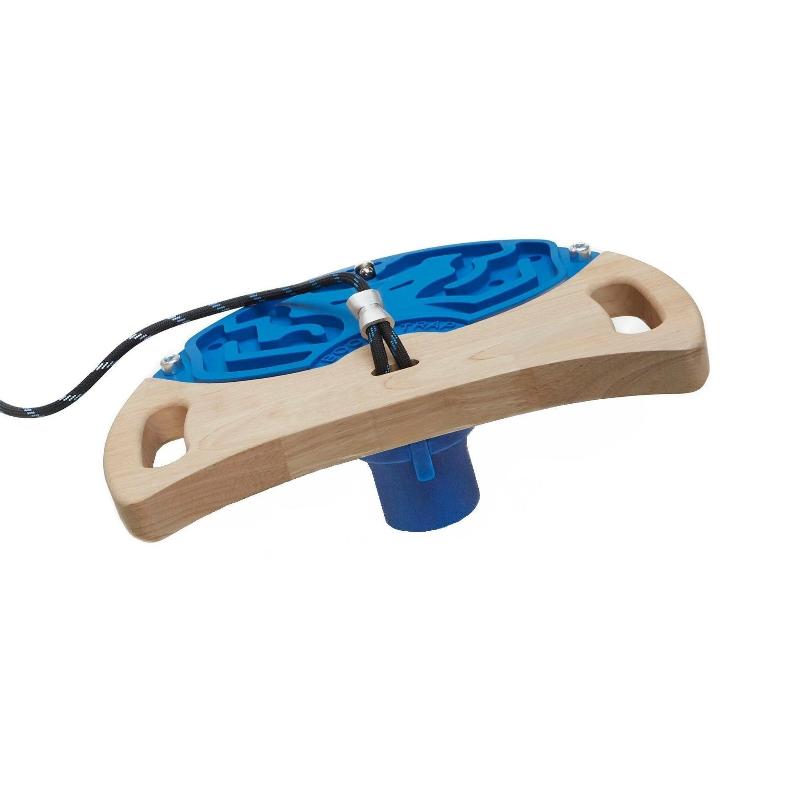


The Modern Equipment Trap
Climbing training tools are becoming:
- Adjustable
- Sensor-driven
- App-integrated
- Multi-angle
- Data-heavy
The assumption is simple:
More features = more progress.
But adaptation does not respond to features.
It responds to:
- Mechanical tension
- Progressive overload
- Repeated exposure
- Recoverable intensity
Complexity does not guarantee any of these.
Why Simplicity Works
Simple tools often have:
- Clear load parameters
- Minimal movement variability
- High repeatability
- Obvious progression paths
A 20mm edge with added weight:
- Load is measurable
- Intensity is adjustable
- Progression is clear
There is little ambiguity.
Ambiguity reduces stimulus clarity.
The Complexity Illusion
Complex tools often:
- Introduce multiple variables at once
- Blur intensity tracking
- Reduce overload precision
- Increase cognitive load
For example:
If a device simultaneously changes:
- Angle
- Grip texture
- Resistance curve
- Instability
It becomes difficult to determine:
What exactly improved?
Complexity can mask stagnation.
When Complexity Is Useful
Complexity is not inherently bad.
It becomes valuable when:
- Skill integration is limiting
- Movement coordination needs challenge
- Power expression requires variability
- Adaptation ceiling has been reached
At high levels, variability refines performance.
But complexity without a strength base reduces clarity.
The Data Problem
Measurement tools can:
- Increase accountability
- Track progression
- Reveal plateaus
But excessive metrics can:
- Distract from intensity
- Shift focus to numbers instead of output quality
- Increase analysis without improving stimulus
Data should support overload.
Not replace it.
Signal vs Noise
Training requires signal clarity.
Signal = precise stress that drives adaptation.
Noise = fatigue, variability, distraction.
Simple tools often maximize signal.
Complex systems risk increasing noise.
If progression is unclear, stimulus is unclear.
If stimulus is unclear, adaptation is unpredictable.
Minimalist Strength Model
For most climbers, effective strength development requires:
- One measurable edge tool
- One integrated force environment
- Basic structural reinforcement
That covers:
- Isolation
- Integration
- Durability
Everything beyond that must justify its recovery cost.
The Recovery Cost of Complexity
Complex training systems often:
- Increase session duration
- Increase joint variability
- Increase cumulative stress
- Increase mental fatigue
If recovery does not scale accordingly:
Progress slows.
Complexity must earn its place.
When to Upgrade Equipment
Upgrade complexity only when:
- Measurable overload is no longer possible
- Specific adaptation plateaus
- Integration limits appear
- Structural resilience is stable
Do not upgrade to feel advanced.
Upgrade when adaptation demands it.
The Core Principle
Simple tools maximize overload clarity.
Complex tools increase variability.
Strength requires clarity first.
Performance refinement can tolerate complexity later.
More features do not create more adaptation.
Clear stress does.