

Finde dein schwächstes Glied
Jeder Kletterer stößt irgendwann an eine Grenze – Fingerkraft, Ausdauer, Technik, Belastbarkeit, wie sich dein Körper unter Last bewegt. Diese Diagnose findet heraus, was dich wirklich zurückhält, indem sie fragt, wie du kletterst, wo du Schwierigkeiten hast und was zusammenbricht, wenn du an deine Grenzen gehst.
Wir bieten zwei Wege an. Die situationsbasierte Diagnose dauert zwei Minuten, erfordert nur deine ehrlichen Antworten und liefert dir ein klares Ergebnis mit einer Trainingsrichtung und den spezifischen Werkzeugen, die zu deinem Limitierer passen. Die datenbasierte Diagnose geht weiter – messe deine tatsächliche Kraft, vergleiche dich mit Kletterern auf deinem Niveau und verfolge echten Fortschritt über die Zeit. Starte mit dem, was zu dir passt: der situationsbasierten Diagnose für eine schnelle Einschätzung oder der datenbasierten Diagnose (derzeit in der Beta-Phase), wenn du gemessene Zahlen möchtest.
Wie es funktioniert
- Beantworte die Diagnosefragen
- Erhalte deinen wahrscheinlichen Limiter
- Folge dem empfohlenen Protokoll
- Nutze die richtige Trainingsausrüstung
- Trainiere das, was wirklich zählt
Available now
Situation-Based Diagnostic
Answer a few questions about how you fail on the wall: small holds, slopers, pinches, pulling moves, fatigue, technique or recurring overload.
You’ll get a practical result page with your likely limiter, recommended protocol and training setup.
Start the diagnosticBeta
Data-Driven Diagnostic
Test your actual strength, compare yourself to climbers at your level, and track real progress over time.
Built and validated through live gym testing and structured data collection.
Start the diagnosticMöchtest du zuerst stöbern?
Sieh dir alle Limiter an, erfahre, was sie bedeuten und wie du sie trainierst – ganz ohne Fragen.
Alle Limiter entdecken →
Hast du das Board noch nicht?
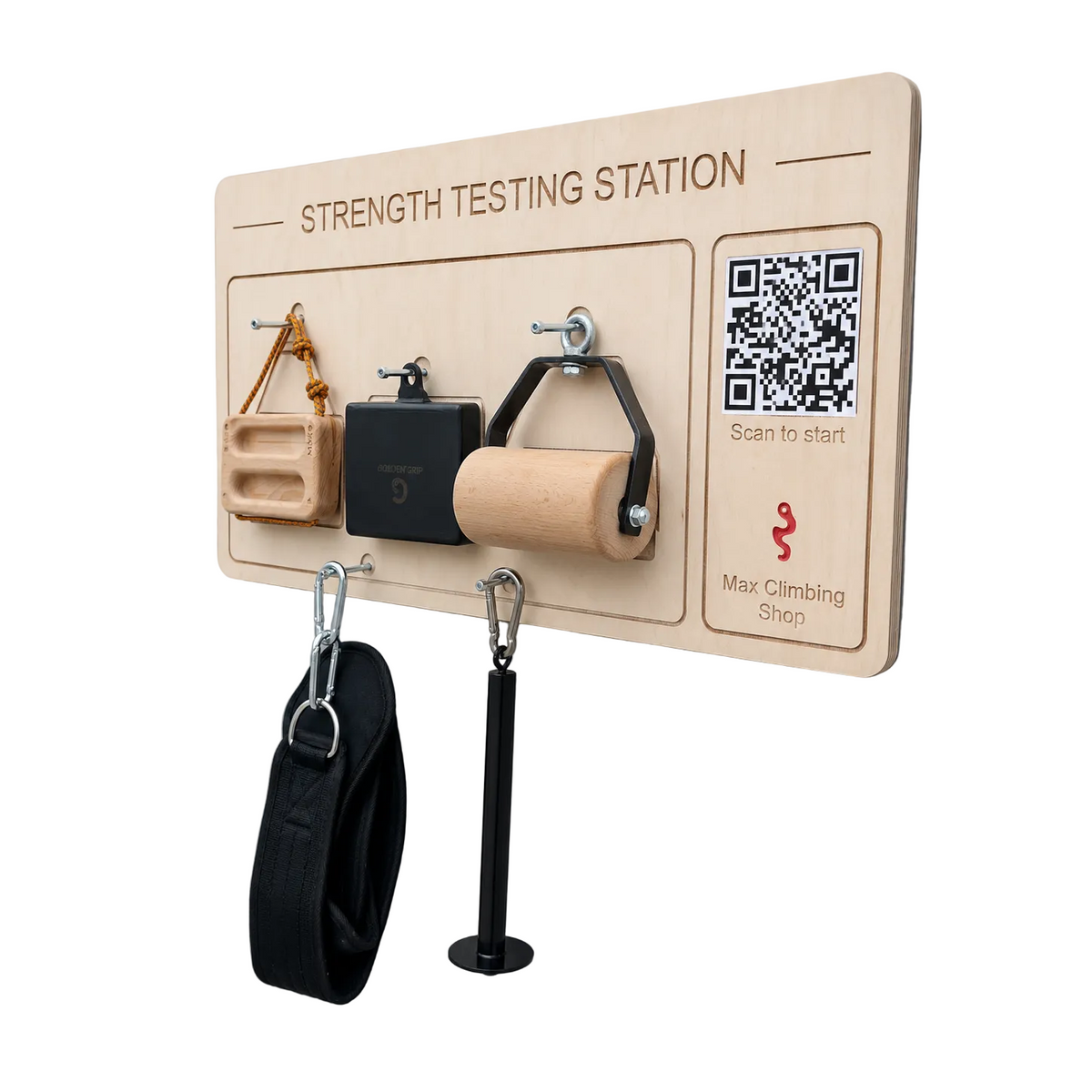
Die datengestützte Diagnostik wird auf der Max Climbing Strength Testing Station durchgeführt – demselben Board, das in Partnergyms verwendet wird. Hol dir selbst eines oder bring es in dein Gym.