
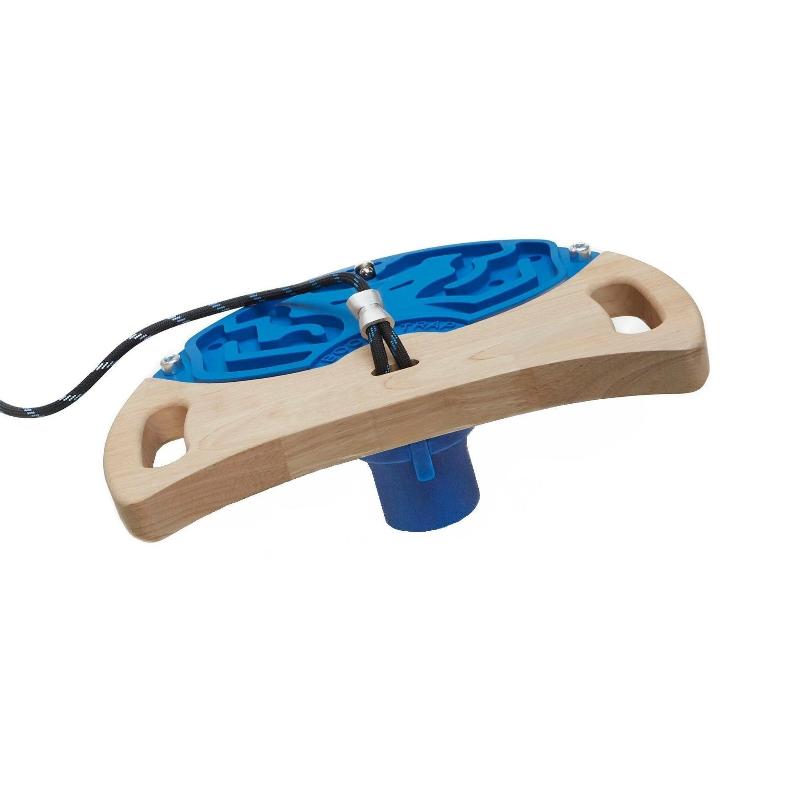


You don’t need a full wall to train at home.
You need a setup that lets you:
- apply load
- control intensity
- repeat it consistently
There are three ways to do that.
Option 1 — Portable setup (minimal space, direct strength)
If you have little space, this is the simplest and most effective start.
What this includes:
- Portable edge → edge / crimp strength
- Pinch block → pinch strength
- Rolling handle → open hand / sloper strength
- Loading pin → progressive overload (add weight)
- Fractional weight plates + weight plates
- Tindeq / force sensor → measurement & data (optional)
What this does well:
- Isolates finger and grip strength
- Easy to load and progress
- Works anywhere
This is the most direct way to build strength with minimal setup.
Use with:
Option 2 — Hangboard setup (body-based strength)
A hangboard brings strength closer to how it’s used in climbing.
What this includes:
- Hangboard
- Mounting solution (wall-mounted or no-drill)
- Weight belt + plates
What this does well:
- Applies force through your body
- Fixed edges → consistent grip selection
- Bridges isolated strength and real use
Less precise than lifting setups, but more integrated.
Use with:
Option 3 — Full setup (strength + integration)
If you want to combine strength with movement, you need a more complete setup.
What this includes:
- Training rack or board system
- Campus board or dynamic tools
- Hangboard + accessories
What this does well:
- Combines strength, coordination, and movement
- Allows more varied training
- Transfers better to climbing
This is where strength becomes usable performance.
How to choose
- Limited space → Portable setup
- Want body-based strength → Hangboard setup
- Train a lot / want full integration → Full setup
You don’t need everything. Each step builds on the previous one.
What to do next
Start training:
- Build strength → Max hangs / Density Hangs
- Build endurance → Repeaters
Choose your tools:
- Portable tools → flexible, space-efficient
- Hangboards → body-based strength
- Full systems → complete setups